Wheaton |
St. Charles |
Sycamore
 630-665-7300



- Home
- Our Firm
- Our Team
- George S. Frederick
- Lynn M. Mirabella
- Henry D. Kass
- Lindsay C. Stella
- Joshua D. Bedwell
- Stacey A. McCullough
- John W. Demling
- Megan C. Harris
- Kira N. Albrecht
- Jacqueline M. Mazur
- Bradley P. Erdman
- Catherine D. Sheehan
- Michael J. Rutcosky
- Jessica L. McGary
- Chad A. Baker
- Naseem N. Hosseini
- Lacey K. Boulware
- Lindsey G. Mirabella
- Amanda J. Werve
- Jordan E. Jenquin
- Matthew P. Karstens
- Maxwell J. Sharkey
- Joseph Mirabella
- John Kincaid
- Practice Areas
- Testimonials
- Media
- Blog
- Contact Us
Recent Blog Posts
How do we Divide Our Property? Dealing With Assets During a Divorce: The Family Home
 Going through a divorce is one of life's most difficult challenges. In addition to the emotional pain and anxiety divorcing spouses' experience, they must also confront the challenges associated with dividing marital assets(property acquired during the marriage). Often the biggest piece of marital property is the family home, which could have been purchased after the marriage or right beforehand, in "contemplation" of the marriage. Not only does the family home often represent the largest single asset, but divorcing spouses often also have an emotional connection to the property. Thus, determining what will happen to the home after a divorce can be a major source of contention for the spouses involved.
In dividing any property in a divorce, Illinois courts use a system known as "equitable distribution," which means property will be divided in a manner the Court determines is fair (which is not always 50/50 between the parties). However a Court decides to divide property, it becomes particularly tricky when dealing with a piece of property, which can be "divided" in one of two ways. The house can be put up for sale and the profit or liability split between the parties, or one spouse can stay in the home and give a corresponding offset in value to the other spouse.
Grounds for Divorce in Illinois

Going through a divorce is usually emotionally difficult for all parties involved. There are many different reasons why people choose to file for divorce, but it is generally never an easy decision to make. Some couples may mutually recognize that their relationship is crumbling, that communication is strained, and that each would be better on their own. In other cases, one spouse may file for divorce without any knowledge or anticipation by the other spouse. Regardless of why a divorce is filed, there is almost always a good reason why that decision was made.
When determining whether or how to proceed with dissolution of your marriage, it is helpful to enlist the help of a trained legal professional who can help you decide what the best process is for you and your family. A family law attorney can also help explain the best grounds to proceed on in a divorce. Grounds for divorce are the legal bases courts use to allow a divorce to proceed, and there are several different approaches and grounds possible.
Establishing Paternity in Illinois
 In the United States, the number of unmarried parents is on the rise. As single parenting becomes more commonplace in modern society, the stigma that it used to carry has begun to fade, and more unmarried parents are asserting their rights. This increase in the rate of single parenting makes the issue of paternity all the more important.
Paternity is the state of being a father; in Illinois, this is also known as having a father-child relationship. For some children, paternity is never legally established. Even if the child of the father is known, his name may never be listed on the birth certificate, there may never be a court determination of paternity, and the father may never play a role in the child's life. Legal paternity is the finding of a father-child relationship by a court.
Marriage Requirements in the State of Illinois
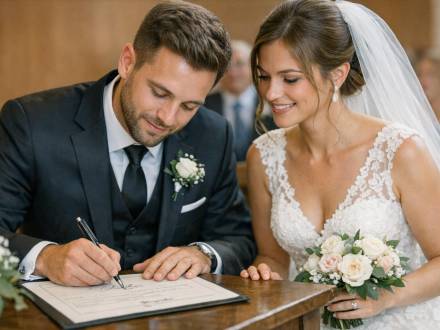
If you have found "the one," the special person with whom you want to spend the rest of your life; if the ring has been purchased and your beloved has said "yes;" if you've already started planning the celebration of your big day, then an important next step is to examine the marriage requirements for the State of Illinois and make sure that you follow them before you take that trip down the aisle.
Getting the License
First, parties who intend to marry must go to the County Clerk's office in the county in which they wish to be married to obtain a marriage license. The Director of Public Health is charged with prescribing the form for a marriage license application under 750 ILCS 5/202. The application itself is pretty straightforward, but requires some very specific details about the parties. These details include:
- The name, sex, & occupation, of each party;
- Addresses;
- Social Security Numbers;
Enforcing Child Support Payments after Your Ex Has Left the State

Enforcing child support is often difficult, even when the person paying support resides in the same state as the child. Enforcing child support becomes increasingly more difficult, however, when the parties reside in different states. Not only is it often difficult to find the person who is supposed to pay, but the process of enforcing the support order is also no easy feat in itself and requires the assistance of a skilled attorney to ensure that the order is issued to the proper court.
Historically, when a non-custodial parent moved out of state, the custodial parent had very limited means by which they could recover or maintain the child support payments. In 1920, the United States Supreme Court even determined that support orders were not enforceable under the United States Constitution's Full Faith and Credit Clause. At that time, to enforce an existing custody order, the custodial parent had to establish a new custody order in the new state, requiring him or her to travel to that state and initiate proceedings there. This was a time-consuming, costly, and inefficient endeavor.
Caring for Your Disabled Child with Supplemental Needs Trusts

Trusts are created for a wide number of reasons; for example, they can be utilized to provide for loved ones, hold property, and pass down wealth to future generations. Supplemental needs trusts are one way that family members can help provide for disabled members of their family, while also allowing those individuals to retain their State and public assistance. This can be particularly helpful for divorcing parents with special needs children.
In Illinois, there are two types of supplemental needs trusts that can be created: third party supplemental needs trusts and supplemental needs payback trusts. Both of these trusts give the child beneficiary the means to enhance his or her quality of life by providing goods or services that are not offered by government assistance programs. A third party supplemental needs trust, also known as a 15.1 trust in Illinois, allows an individual to provide for a disabled child without interrupting or otherwise interfering with the child's Medicaid expenditures. Usually, third party supplemental needs trusts are set up by the special needs child's parents.
Illinois Legislature Considering Two Different Family Law Bills Dealing with Parenting Time

There are two "dueling" bills currently pending in the Illinois legislature that relate to divorce and parenting time (otherwise known as visitation). The passage of one of the bills, House Bill 1452, would introduce sweeping changes to the Illinois divorce laws. The other bill, House Bill 5425, focuses only on setting new standards and presumptions for parenting time for non-custodial parents.
Although there is not one single "standard" visitation schedule for non-custodial parents, a common default arrangement gives a non-custodial parent visitation every other weekend and one or two evenings for dinner during the week. Many in the family law profession believe this default schedule needs to change. In 2008, the Family Law Study Committee was formed to address proposed changes to Illinois divorce law. Members of that committee included family advocates, attorneys, and members of the legislature. Their recommendation was that giving both parents equal parenting time is often in the best interest of the children and, therefore, Illinois law should reflect that idea.
Study Says More Divorces Are Good News for The Economy
 In 2012, the number of individuals in the United States who filed for divorce rose for the third year in a row. All three of those years were following a major recession, perhaps indicating a link between economic improvement and the number of people seeking a divorce.
Though bad news for those who do not want a divorce, the upswing in the number of people filing for divorce could be an indicator that peoples' personal financial situations are improving—meaning, those who file for divorce now have the ability to pursue a divorce where perhaps previously poor finances would have prevented them from filing.
When the economy is in a recession, and especially when unemployment numbers are up, people tend to avoid potentially costly big life changes if they can. And it's not just the legal fees people are trying to avoid; for example, couples who want to divorce often have property that should be listed for sale. In the midst of a bad housing market, these couples might decide it simply doesn't make sense to divorce and split finances when they could wind up losing value on their property.
Mediation can Play a Unique Role in Jewish Divorce
 Mediation is a useful tool for all divorcing couples to help resolve issues related to the divorce outside of the courtroom. Mediation may have some added benefit, however, for Jewish women who are able to obtain a divorce in civil court, but who may be denied (by their husbands) a Jewish religious divorce , known as a "get." According to the Huffington Post, this problem is becoming a crisis for Jewish women whose husbands refuse to allow a get. By utilizing mediation, however, women may be able to obtain both a civil and religious termination of their marriage. There are several reasons why the use of mediation may be a better alternative for women potentially facing this issue.
To start with, mediation can remove the potential for courtroom drama, which could cause an Orthodox religious man to feel embarrassed or that he is being treated unfairly (which could be reasons for denying a get). Additionally, instead of focusing on the civil litigation aspect of ending a marriage (which can cause anger, frustration, and resentment), mediation allows for the possibility of more creative solutions, tailored for the parties and created by them rather than by strangers. Having more control over life post-divorce through creative mediation settlements can also reduce some of the tension between a divorcing couple, allowing them to find more common ground. All of this could lead to a husband being more open to the idea of a get than by simply pursuing civil litigation alone.
Tips for Illinois Couples Facing Divorce - Cooler Heads Prevail

"Let cooler heads prevail with these men and women who work for the cause with all their hearts, with cool heads and skilled hands will master every fate" – Gustav Krupp.
Perhaps this German diplomat from the late 19th Century was onto something. In today's parlance, this phrase is known as simply: "don't lose your cool."
For couples facing divorce, this should become each party's daily mantra, though it's certainly easier said than done. The divorce process is such a powerful, emotional experience that it is often equated to the experience of the death of a loved one. Such an experience could evoke an overload of emotions that come bubbling to the surface. There are ways, however, to ensure that you do not lose your cool and "let cooler heads prevail."
Step 1: Set Realistic Expectations for Family and Friends
A divorce not only means the final division of assets and property, but also the division of family and possibly friends. It is important to keep in mind that you are likely not the only one experiencing anxiety over the dissolution of your marriage. Therefore, don't feel offended or betrayed if not everyone you know is your personal cheerleader. Be forgiving and take comfort that those standing by your side at the end—and there will be friends and family standing by your side at the end—truly believe in you and love you.
 Read More
Serving DuPage, Kane, Kendall, Will, Cook, and Lake Counties Since 1949
For guidance with your case, contact our attorneys at 630-665-7300. We will answer your questions, explain the process relevant to your case, and advise how best to proceed. Our firm has locations in Wheaton and St. Charles, Illinois, and we work with clients throughout the Chicagoland area, including, DuPage, Kane, Kendall and Will Counties.
Looking for something specific?
Search our site here.


From our law offices in Wheaton, St. Charles, and Sycamore, the family law and civil litigation law attorneys of Mirabella, Kincaid, Frederick & Mirabella, LLC represent businesses and individual clients throughout the western suburbs of Chicago, including Wheaton, Naperville, Oak Brook, Oakbrook Terrace, Glen Ellyn, Carol Stream, Lombard, Downers Grove, Burr Ridge, Hinsdale, Lisle, Elmhurst, Winfield, Woodridge, Warrenville, and throughout DuPage County. We also serve clients in Will County, Kendall County, DeKalb County, and Kane County, including St. Charles, Sugar Grove, Geneva, DeKalb, Batavia, Aurora, North Aurora, Elgin, Algonquin, Barrington Hills, Bartlett, Big Rock, Burlington, Campton Hills, Carpentersville, West Dundee, East Dundee, Elburn, Hampshire, Huntley, Kaneville, Maple Park, Sleepy Hollow, and Wayne.
Results listed are not a guarantee or indication of future case results.
1737 South Naperville Road, Suite 100, Wheaton, IL 60189
630-665-7300