Wheaton |
St. Charles |
Sycamore
 630-665-7300



- Home
- Our Firm
- Our Team
- George S. Frederick
- Lynn M. Mirabella
- Henry D. Kass
- Lindsay C. Stella
- Joshua D. Bedwell
- Stacey A. McCullough
- John W. Demling
- Megan C. Harris
- Kira N. Albrecht
- Jacqueline M. Mazur
- Bradley P. Erdman
- Catherine D. Sheehan
- Michael J. Rutcosky
- Jessica L. McGary
- Chad A. Baker
- Naseem N. Hosseini
- Lacey K. Boulware
- Lindsey G. Mirabella
- Amanda J. Werve
- Jordan E. Jenquin
- Matthew P. Karstens
- Maxwell J. Sharkey
- Joseph Mirabella
- John Kincaid
- Practice Areas
- Testimonials
- Media
- Blog
- Contact Us
Recent Blog Posts
Divorce vs. Annulment— Does it Matter?
 People use the terms ‘divorce' and ‘annulment' interchangeably, but there is a difference between the two that can have serious consequences. Illinois law defines divorce as a legal procedure that results in the termination of the marriage; basically, this means there was a valid, legal marriage under the laws of the state of Illinois that has now been terminated. Moreover, as part of the divorce, both parties will get an equitable portion of the assets that belonged to the marital estate, which a divorce judge will divide between the parties.
Annulments, on the other hand, target the validity of the marriage in the first place. The process of annulment under Illinois law is known as a declaration of the invalidity of a marriage. This process is designed to determine whether the marriage ever legally existed or whether it was invalid right from the start. The Illinois Marriage and Dissolution of Marriage Act has specific conditions for determining whether a marriage may be annulled for being invalid. Contrary to divorce, a successful annulment may mean that each party gets to keep his or her own assets even though those assets were acquired during the marriage; in other words, the assets never legally become part of the marital estate.
The Future of Illinois Divorce Laws
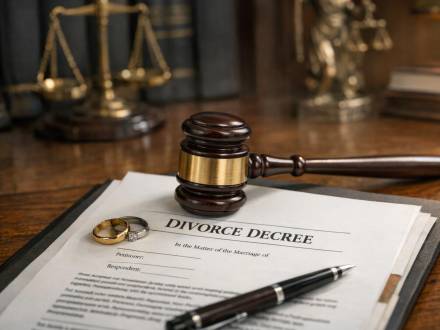 Proactive divorce attorneys in Illinois are poised to handle potential imminent changes to the Illinois Marriage and Dissolution of Marriage Act (IMDMA, for short). Recommendations for changes to the IMDMA from the Family Law Study Committee, a group of individuals who have been studying existing Illinois divorce laws since 2008, are very close to being enacted. The Illinois State Bar Association's Director of Legislative Affairs recently reviewed and compiled a list of all of the potential changes to the IMDMA. If these changes pass this Fall's legislative veto session, the changes will be put into effect as early as Summer 2014. These changes could result in significant changes to how divorces in Illinois occur.
Maintaining after Maintenance: Preparing for Tax Season
 Maintenance, formerly referred to as alimony, is a monetary payment from one spouse to another spouse in need of financial support during and after a divorce. Maintenance can be in the form of regular monthly payments, which can be temporary or indefinite. Courts consider many different factors in determining the amount, type, and structure of maintenance after divorce, and parties to a divorce and their attorneys should take all of these factors into account when negotiating an appropriate maintenance award and structure.
Regardless of the structure, maintenance normally leads to an income increase for the spouse awarded the payment as part of a divorce. This means that unless otherwise stated, the receiving spouse will have to pay taxes on the support he or she receives from a former spouse. It is therefore important for the receiving spouse to understand the financial impact that our ever-changing income tax laws can have on the award. Individuals trying to interpret and understand tax language should seek the help of professionals to help them navigate the effects of income tax laws and income tax law changes on any maintenance award they may receive.
Verbal Abuse Is Damaging

Verbal abuse, sometimes called emotional or psychological abuse, can take many different forms. Blaming, accusing, name calling, disparaging, yelling and belittling are all forms of verbal abuse. This form of abuse often causes serious emotional pain and mental anguish. The recipient of verbal abuse ends up constantly defending and explaining him or herself to the abuser—an exhausting cycle of back-and-forth contention between the parties that can break a person's spirit nearly beyond repair.
Unfortunately, verbal abuse can be a frequent occurrence in many relationships. In couples, a verbal abuser often views his or her partner's "separateness," i.e. that person's independent thoughts, views, desires, feelings, and expressions, as an irritation or even an attack on the abuser. There are many theories as to the cause of verbal abuse, including the notion that an abuser may have low self-esteem and so, through verbal abuse, the abuser helps to bring the victim down to that same level.
Family Law 101: What is Mediation?
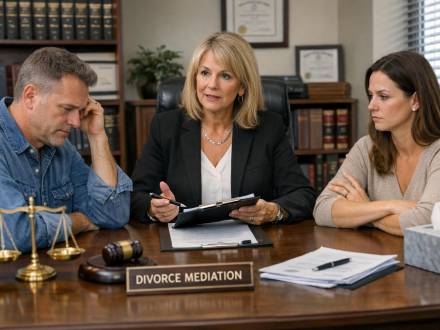 Often in family law matters, including divorce, mediation can be a viable method for resolving disputes in a mutually-agreeable manner. The mediation process, governed in Illinois by the Uniform Mediation Act and by various local court rules, has a sole purpose – to provide a forum for reaching voluntary agreements between parties without resorting to contested litigation. According to DuPage County local rules, mediation is "an informal and non-adversarial process. The role of the mediator includes, but is not limited to, assisting the parties in identifying issues, fostering joint problem solving, exploring settlement alternatives and reaching an agreement." When family law matters do arise, mediation can be the basis for creating a comprehensive agreement to help families move forward in the best possible direction.
Generally speaking, a mediator works with both parties to discuss the issues and facilitate the creation of solutions and arrangements that are agreeable to both parties. Because the mediator works with both parties, he or she must remain neutral and cannot advocate specifically for one side or the other. Although Illinois does not have a formal certification process for mediators, it is a good idea for parties to select an experienced certified mediator who uses best practices and ethics guidelines in conducting mediation. Having a well-trained, experienced, professional mediator can help parties avoid the difficult and stressful process of litigation and come to a prompt, amicable resolution of issues.
Online Dating: Couples Created in Cyberspace

More people are clicking their way to romance, and a recent survey finds public perception is starting to favor online love connections. A recent article in USA Today reports that more than one third of recent newlyweds met online. The survey, published by Proceedings of the National Academy of Sciences (PNAS), questioned 19,131 participants who were married between 2005 and 2012.
The lead author of the study, John Cacioppo, a University of Chicago psychology professor, is also an advisor to eHarmony, a prominent online dating website. Although the study has some opposition, it is undeniable that the number of people connecting through online dating sites and social media is increasing.
Evidence of the rise in online dating is reflected in Illinois laws. The Internet Dating Safety Act outlines requirements for Internet-based dating services offered to Illinois residents and advocates individual responsibility and safety when using online services.
Marriage after Infidelity- Is it Possible?

Trust is the cornerstone of any relationship and without it a relationship has no foundation. A breakdown of trust can be the result of many different situations such as infidelity, addiction, or just outright lying.
Rebuilding trust in a relationship means that changes must be made. Make sure that you and your partner are both clear on the changes that are needed and expected. Set goals that are attainable. Talk about the progress that you are making and check in with your loved one to see how they are feeling about the progress.
Once you have decided to forgive your partner you have to do your part in rebuilding the trust. Do not throw past transgressions in the face of your partner every chance you get. That is not fair to you or your loved one. If you are constantly reminding him or her of what they did wrong and accuse them of doing it again, you are also preventing the restoration of you relationship.
All About Alimony, Maintenance, and Spousal Support in Illinois?
 If you are in the midst of a divorce and your spouse is asking for alimony, you may be curious as to how the amount that will be allocated is determined. Alimony, also known as spousal support, is a financial award that one spouse will pay to the other spouse while he or she becomes accustomed to supporting themselves.
At the present, there is no specific formula that exists to determine how much, if any, support will be awarded. However, several factors are considered, such as, the income
and property of each party; the needs of each party; the present and future earning capacity of each party; any impairment to the earning capacity of the party seeking maintenance due to that party devoting time to domestic duties or having forgone or delayed education, training, employment, or career opportunities due to the marriage; the time necessary to enable the party seeking maintenance to acquire appropriate education, training, and employment, and whether that party is able to support himself or herself through appropriate employment or is the custodian of a child making it appropriate that the custodian not seek employment; the standard of living established during the marriage; the duration of the marriage; the age and the physical and emotional condition of both parties; the tax consequences of the property division upon the respective economic circumstances of the parties; contributions and services by the party seeking maintenance to the education, training, career or career potential, or license of the other spouse; any valid agreement of the parties; and any other factor that the court finds to be just and equitable.
Technology and Catching a Cheating Spouse

Not long ago, the major tool used to catch a cheating spouse was a private detective who would follow the suspected cheater and try to get photos of the spouse in the act. But today, with all the intelligence technology that has become so inexpensive and available, it's a lot easier to find out exactly what a philandering spouse has been up to.
However, this technology raises some important legal questions. Last year, the United States Supreme Court ruled that law enforcement using a GPS tracking system to monitor someone's movements constitutes a "search". The court ruled a warrant must be obtained before a tracker can be put on someone's vehicle. The law about GPS tracking by a private individual remains a gray area.
Some states, like California, Minnesota, Texas and Virginia, allow private individuals to put a tracking device on a person's vehicle if that person gives their consent. Where there is no consent, it is considered a misdemeanor that can result in a fine and a jail sentence of 6 to 12 months.
What You Say Creates Your Future
 Most people are aware that maintaining a happy marriage is hard work. However, most people are unaware that despite all of that effort, the words they use may be working directly against those efforts. It turns out that certain words increase your chances of a divorce. Listen to the words that you are using, you might be surprised by what you are saying and where you are headed.
When couples use the words "Never" and "Always" it represents an all or nothing posture. These words establish a situation that promotes the attitude of a lack of comprise and kindness.
The word "but" when used implies a lack of integrity and manipulation. When a spouse uses this word in an argument or discussion he or she is negating what was previously said that might have been positive, undermining his or her ability to build trust and intimacy.
Swear words and other negative based words represent an attack, and a lack of respect and positive feelings towards your partner. Using these words regularly is a strong indication you're headed for a divorce. If the "D" word (divorce) is also being thrown around, the possibility of an end to the marriage is closer than you may think.
 Read More
Serving DuPage, Kane, Kendall, Will, Cook, and Lake Counties Since 1949
For guidance with your case, contact our attorneys at 630-665-7300. We will answer your questions, explain the process relevant to your case, and advise how best to proceed. Our firm has locations in Wheaton and St. Charles, Illinois, and we work with clients throughout the Chicagoland area, including, DuPage, Kane, Kendall and Will Counties.
Looking for something specific?
Search our site here.


From our law offices in Wheaton, St. Charles, and Sycamore, the family law and civil litigation law attorneys of Mirabella, Kincaid, Frederick & Mirabella, LLC represent businesses and individual clients throughout the western suburbs of Chicago, including Wheaton, Naperville, Oak Brook, Oakbrook Terrace, Glen Ellyn, Carol Stream, Lombard, Downers Grove, Burr Ridge, Hinsdale, Lisle, Elmhurst, Winfield, Woodridge, Warrenville, and throughout DuPage County. We also serve clients in Will County, Kendall County, DeKalb County, and Kane County, including St. Charles, Sugar Grove, Geneva, DeKalb, Batavia, Aurora, North Aurora, Elgin, Algonquin, Barrington Hills, Bartlett, Big Rock, Burlington, Campton Hills, Carpentersville, West Dundee, East Dundee, Elburn, Hampshire, Huntley, Kaneville, Maple Park, Sleepy Hollow, and Wayne.
Results listed are not a guarantee or indication of future case results.
1737 South Naperville Road, Suite 100, Wheaton, IL 60189
630-665-7300