Wheaton |
St. Charles |
Sycamore
 630-665-7300



- Home
- Our Firm
- Our Team
- George S. Frederick
- Lynn M. Mirabella
- Henry D. Kass
- Lindsay C. Stella
- Joshua D. Bedwell
- Stacey A. McCullough
- John W. Demling
- Megan C. Harris
- Kira N. Albrecht
- Jacqueline M. Mazur
- Bradley P. Erdman
- Catherine D. Sheehan
- Michael J. Rutcosky
- Jessica L. McGary
- Chad A. Baker
- Naseem N. Hosseini
- Lacey K. Boulware
- Lindsey G. Mirabella
- Amanda J. Werve
- Jordan E. Jenquin
- Matthew P. Karstens
- Maxwell J. Sharkey
- Joseph Mirabella
- John Kincaid
- Practice Areas
- Testimonials
- Media
- Blog
- Contact Us
Recent Blog Posts
What Are the Steps to Become a Guardian for a Disabled Adult in Illinois?
 When a family member cannot make important decisions on their own due to a disability, you may want – or need – to become their legal guardian. "Guardianship" is a big responsibility that gives you legal authority to make decisions for someone who cannot make them alone.
In 2026, many Illinois families are caring for disabled adults. These family members need help managing their finances, healthcare, and daily living. If you are considering guardianship for a disabled adult, our Kane County guardianship attorneys can help you understand the process.
What is Guardianship for a Disabled Adult?
"Guardianship" is where a court gives one person the authority to make decisions for another person who cannot make those decisions themselves. The person who needs help is called the "ward," and the person making decisions is the "guardian."
Can I Modify Child Parenting Plan Arrangements After My Divorce?
 Life keeps moving after divorce. You might switch jobs, one parent may need to move to a new city, and no matter what, your children continue to grow and change.
When these life changes happen, you may find that your parenting plan no longer fits your family's needs. If you are wondering if you can adjust your parenting arrangement in 2026, a DuPage County child custody lawyer can help you understand Illinois modification laws and help you plan your next steps.
What Parts of a Parenting Plan Can Be Changed?
Illinois law divides parenting plans into two main parts:
-
The "allocation of parental responsibilities" covers who makes important decisions about your child's education, health care, religion, and other activities. Before, this was called "legal custody."
-
"Parenting time" is the schedule when your child stays with each parent. This used to be called "visitation."
The Effects of Parental Undue Influence on Custody and Visitation
 Separation and divorce can be very difficult for children. The way parents treat one another can make a huge difference in how a child processes the parents' separation. If negative feelings between parents continue after a divorce, some parents may do something called "parental undue influence."
If you have recently gotten divorced and are worried that your child’s other parent is influencing them against you, contact our Kane County family law attorneys right away.
What is Parental Undue Influence?
In some divorces, one parent may try to manipulate a child's thoughts and feelings about the other parent in negative ways. The parent might speak badly about the other parent, tell lies about them, or pressure the child to take sides. This is called "parental undue influence." It is closely related to "parental alienation," and it can cause serious psychological damage to children.
How Do 2026 Amendments to the Illinois Workplace Transparency Act Affect Me if I Make a Sexual Harassment Claim?
 If you are dealing with sexual harassment at work in DuPage County, new changes to Illinois law offer you stronger protections. On January 1, 2026, important updates to the Illinois Workplace Transparency Act took effect. These changes make it harder for employers to silence you if you speak up about harassment.
Understanding these new protections can help you feel more confident about reporting what is happening to you. Whether you are facing unwanted touching, inappropriate comments, or other forms of harassment, you now have more tools to protect yourself.
Our DuPage County sexual harassment attorneys take time to listen to our clients’ cases. When our clients are ready, we work to ensure cases of serious workplace harassment are brought to justice. Call us today for a private consultation.
What is the Workplace Transparency Act, and What Does It Do?
The Illinois Workplace Transparency Act (820 ILCS 96) is a law, first created about five years ago, that is meant to stop employers from trying to force you to stay quiet about workplace harassment and discrimination. Some employers used to make workers sign non-disclosure agreements or confidentiality clauses that prevented them from talking about harassment that happened at work. This made it difficult for victims to get help or warn others about dangerous situations.
Understanding the Difference Between Sexual Misconduct, Sexual Harassment, and Sexual Assault
 The "Me Too" movement was a serious effort to end workplace sexual harassment, particularly against women. Allegations against high-profile individuals in the media and other high-exposure, high-power positions were made by alleged victims. Powerful men were accused and some even spent real time behind bars.
In the years since, many more women who had silently endured sexual harassment have come forward to report the behavior. Yet even in 2026, there remains a great deal of confusion about terms like sexual harassment, sexual misconduct, and sexual assault.
What exactly is sexual harassment? What is the difference between sexual harassment, misconduct, and assault? When can you take legal action for behavior that makes you uncomfortable at work?
Our Illinois sexual harassment lawyers are experienced and fearless. If someone is bothering you at work and you want it to stop, call Mirabella, Kincaid, Frederick & Mirabella, LLC today.
What Does It Mean to Be Deemed an Unfit Parent in Illinois?
 A parent may be called "unfit" in Illinois when a court believes the parent’s behavior puts a child at serious risk of harm. This can involve safety concerns, emotional harm, or failure to meet a child’s basic needs. It can come up during the allocation of parental responsibilities or later.
A finding of unfitness is serious, but it is not automatic. It also does not always last forever. If this issue is part of your case, our Wheaton, IL parental responsibilities lawyers can help you understand how Illinois courts make these decisions.
How Do Illinois Courts Decide Whether a Parent Is Unfit?
As of 2025, Illinois courts do not use a single test to decide whether a parent is unfit. Instead, judges focus on the best interests of the child. Judges look at the child’s safety, stability, and overall well-being.
Under 750 ILCS 5/602.5, judges decide how parental responsibilities should be allocated, including who makes major decisions about education, health care, and religion. When evaluating fitness, courts look for patterns of behavior over time, not one isolated mistake.
Understanding Guardians Ad Litem in Illinois Child Custody Cases
 In Illinois child custody cases, a guardian ad litem (GAL) may be appointed to make a recommendation to the Court as to what is in a child’s best interests. A GAL is typically an attorney who is tasked with investigating the child’s home life to make recommendations regarding allocation of parental responsibilities, parenting time, and other issues related to the child's welfare. If you have questions about an ongoing GAL investigation, reach out to a Kane County, IL family law attorney today.
Understanding the role of GAL in Illinois child custody cases is essential for parents who are going through a divorce or custody dispute. At Mirabella, Kincaid, Frederick & Mirabella, LLC, we have over 100 years of combined attorney experience, giving us deep insights into practicing family law.
What is a Guardian ad Litem?
An article published in ScienceDirect claims that over a million children are affected by the stresses of parental divorce in the U.S. every year. A GAL is a person the court appoints to help represent the child's best interests in a custody case. The GAL is not a party to the case but rather an independent third party that is directed to investigate and make recommendations regarding what is best for the child.
Where Illinois Employers Fail in 2024–25 Harassment Training
 Although most Illinois employers take sexual harassment training seriously, some may approach mandatory annual sexual harassment training as something to get through as quickly as possible. The Illinois Human Rights Act (775 ILCS 5/) and the IDHR model training have very specific training requirements. Whether a business is small, large, remote, hybrid, or multi-location, it is all too easy to fall out of compliance.
Even well-intentioned employers may be relying on outdated modules, skipping key content, or failing to properly document completion. These mistakes can lead to legal exposure, reputational harm, and an increase in workplace complaints. Employees may end up feeling as though their workplace does not take the issue seriously when there is not full compliance with training requirements.
If you are an employee who feels as though your company is not complying with Illinois-mandated sexual harassment training, or you have experienced sexual harassment in the workplace, an experienced DuPage County, IL, sexual harassment lawyer can help.
When Teen Driving Sparks Major Co-Parenting Disputes
 Even parents who have successfully navigated co-parenting through toddlerhood, grade school, and middle school after a divorce may find themselves in uncharted waters when the child becomes a teenager. While one parent may see a brand-new driver’s license for a teenager as a milestone of independence, the other may see nothing but potential danger. This means that when a teen begins driving, Illinois parents may discover an entirely new category of conflict.
From skyrocketing insurance premiums to disagreements about whether a car is actually a "necessity," and, if so, what the rules will be, teen driving can quickly become a constant battle. The disputes can intensify when one parent refuses to list the child on his or her insurance policy, objects to siblings as passengers, or claims the other parent is letting unsafe driving behaviors slide.
And which parent – if either – is responsible for paying for a teen’s car? Under Illinois law (750 ILCS 5/602.5), these issues intersect with decision-making authority, financial responsibilities, and safety considerations, making them much more complicated than "regular" household rules. A Kane County, IL family law attorney can help you navigate this unknown territory while assisting with a post-decree modification, if necessary.
Illinois Support Cases Involving Cash or "Off-Books" Pay
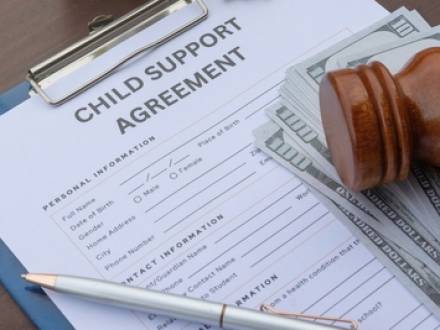 A spouse who is routinely paid in cash, or "off the books," makes it very easy for him or her to claim they make much less money than they actually do when alimony and child support are being discussed. If that spouse’s lifestyle tells a different story – steady work, weekend trips, or major cash purchases, then an Illinois court is unlikely to simply take the spouse’s word about income. Many Illinois spouses facing alimony or child support disputes suspect that the other spouse is drastically underreporting what he or she makes.
Unfortunately, cash-heavy jobs like construction, landscaping, bartending, and gig work allow income to magically "disappear" because there are no pay stubs, tax returns, or bank records. Under Illinois law (ILCS Chapter 750 Section 5/505, 3.2a), however, the court is not limited to whatever a spouse chooses to report. The judge can look deeper, reconstruct income from lifestyle evidence, and impose support obligations based on what the spouse should be earning.
 Read More
Serving DuPage, Kane, Kendall, Will, Cook, and Lake Counties Since 1949
For guidance with your case, contact our attorneys at 630-665-7300. We will answer your questions, explain the process relevant to your case, and advise how best to proceed. Our firm has locations in Wheaton and St. Charles, Illinois, and we work with clients throughout the Chicagoland area, including, DuPage, Kane, Kendall and Will Counties.
Looking for something specific?
Search our site here.


From our law offices in Wheaton, St. Charles, and Sycamore, the family law and civil litigation law attorneys of Mirabella, Kincaid, Frederick & Mirabella, LLC represent businesses and individual clients throughout the western suburbs of Chicago, including Wheaton, Naperville, Oak Brook, Oakbrook Terrace, Glen Ellyn, Carol Stream, Lombard, Downers Grove, Burr Ridge, Hinsdale, Lisle, Elmhurst, Winfield, Woodridge, Warrenville, and throughout DuPage County. We also serve clients in Will County, Kendall County, DeKalb County, and Kane County, including St. Charles, Sugar Grove, Geneva, DeKalb, Batavia, Aurora, North Aurora, Elgin, Algonquin, Barrington Hills, Bartlett, Big Rock, Burlington, Campton Hills, Carpentersville, West Dundee, East Dundee, Elburn, Hampshire, Huntley, Kaneville, Maple Park, Sleepy Hollow, and Wayne.
Results listed are not a guarantee or indication of future case results.
1737 South Naperville Road, Suite 100, Wheaton, IL 60189
630-665-7300